ADNiR Scholars
Meet our 2026 ADNiR Scholars
Tanisha Angoth

Tanisha Angoth is a second-year Behavioral Neuroscience major on the pre-med track. She aspires to pursue medical school after graduation and build a career that bridges neuroscience research and patient care. Her academic interests center on the use of neuroimaging methods to detect early symptoms and improve the diagnosis of neurological and psychiatric disorders, alongside pharmacological interventions to optimize patient care and outcomes. As an ADNiR Scholar, Tanisha aims to develop her research skills further and contribute to new approaches in the clinical neuroscience field.
For my first rotation, I worked in Dr. Kristin Hoskinson’s lab at Nationwide Children’s Hospital. I was introduced to pediatric neuropsychology research and had the opportunity to shadow study visits, learn more about neuropsychological assessments, and also gain more experience with data analysis. I especially enjoyed getting to see how research can be applied to understand the cognition and behaviors of pediatric patients.
My second rotation was completed in Dr. Julie Golomb’s lab where I was exposed to research surrounding visual perception and attention. I had the opportunity to work on a multitude of research methods including eye tracking, fMRI, EEG, and TMS. One of the most interesting things I worked on was fMRI analysis using BrainVoyager.
For my third rotation, I worked in Dr. Hsin-Hung Li’s lab which aided in gaining more experience with data analysis. I had the opportunity to work more with MATLAB and learn how such computational methods can be used to process and analyze eye-tracking data.
After I completed all three rotations, I decided to continue working in Dr. Hoskinson’s lab. Each rotation expanded my knowledge in different areas of neuroscience and helped me better understand my own research interests. I was ultimately drawn to the Hoskinson Lab due to its combination of neuroscience, clinical research, and direct relevance to patient outcomes. As a neuroscience student interested in pursuing medicine, I felt that the lab aligned closely with both my research and professional interests. I also really valued the supportive and welcoming environment of the lab, as well as the mentorship I received during my rotation.
Moving forward, I will be performing a preliminary analysis on one of Dr. Hoskinson's ongoing studies, which characterizes the neurocognitive and behavioral functioning of children diagnosed with cancer in early childhood. I am currently exploring a project focused on task performance, emotional regulation, and their relationship with neuroimaging measures. I hope this work will help me better understand how differences in brain structure and function may relate to emotional and behavioral outcomes in pediatric cancer survivors.
Abeeku Kittoe
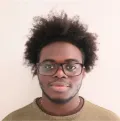
Hi my name is Abeeku Kittoe. I am a 3rd year Psychology major on a pre-med track. I am interested in how neuroimaging research can improve patient care relating to mental health and neurological illnesses. In the ADNiR program I want to be contribute to that sort of research and have an impact on the future of neuroscience research. I aim to attend medical school and specialize in psychiatry.
This summer I rotated with Dr. Scott Hayes’ BBAL lab, Dr. Jasmeet Hayes’ MINDSET lab, and Dr. Jay Fournier’s MIND lab. During my time in the BBAL lab, I focused on QCing MRI data and making sure the scans were free of artifacts that would make further analysis difficult. In the MINDSET lab, I focused on reviewing literature about using Normative analysis methods with MRI data. I worked on QCing in the MIND lab as well, but I also learned about the MIND lab’s specific data processing pipeline. I have chosen to join Dr. Jay Fournier’s MIND lab, and my major reason for choosing the MIND lab is that the research focus of the lab aligns most with the area of Neuroscience that I am most interested in. I will be working on the MIND lab’s NOMAD study, which focuses on Anger-Hostility as a factor of depression and Anger-Hostility’s association with specific patterns of neural function.
2025 ADNiR Scholars
Cindy An
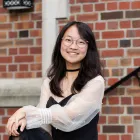
Cindy is an ADNiR scholar in the Multifaceted Explorations of the Neurobiology of Depressive Disorders (MEND2) lab under the mentorship of Dr. Mindy Westlund Schreiner and Dr. Scott Langenecker. Her project uses fMRI to determine if there may be altered cognitive processes associated with self-injury.
She is a Neuroscience and Psychology major with a minor in Statistics. Cindy is passionate about uncovering the neural underpinnings of negative symptoms and suicidal behavior in psychotic disorders. She hopes to pursue a PhD in clinical psychology to further explore these interests.
During her first year as an ADNiR scholar:
Cindy was selected for the Barry Goldwater Scholarship, a prestigious undergraduate award for research in STEM. She was 1 of 8 students selected nationwide in the field of psychology.
Cindy presented her research at the Society for Biological Psychiatry conference in New York.
Cindy was a co-author on a paper published in the journal The Cerebellum: Effective Connectivity Identifies Divergent Cerebro-Cerebellar Network Organization in Schizophrenia.
Vania Gandhi
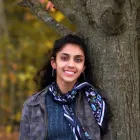
Vania is an ADNiR scholar in the Aphasia Laboratory with Dr. Stacy Harnish.
Vania has completed her third year, studying neuroscience on a pre-med track. As a part of the ADNiR program, she hopes to be a part of translational neuroimaging research that can directly improve patient outcomes, particularly for managing mental health and chronic illnesses.
Vania's research project in Dr. Harnish's lab is focused on understanding the neural networks that support verbal and nonverbal memory in people with aphasia, and how lesions within these networks related to behavioral performance.
2024 Recipients
We are proud to announce our 9th and 10th ADNiR scholars graduated this spring. Declan Alford and Sophie Jeng both joined Dr. Kristen Hoskinson’s research group after their summer rotations in 2024.
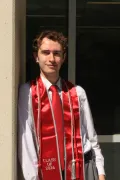
Declan successfully defended an undergraduate thesis, Theory of Mind Task Performance in Critical Heart Disease, on April 30, 2026. This project examined whether critical congenital heart disease (cCHD) affects the theory of mind, or one’s ability to understand social situations and other people’s feelings, in addition to established deficits in other areas of neurocognition like processing speed. He showed that his sample of children with cCHD performed significantly worse on both processing speed and theory of mind tasks, which were positively correlated with each other. This suggests that children who can process information more quickly and accurately may also be better at understanding and responding to social cues. Moreover, he found that children with cCHD performed particularly poorly on the task trials that required cognitive theory of mind relative to control trials, indicating some specificity in this deficit rather than a more general inability to accurately engage in the task. Declan plans to take a gap year to gain direct clinical experience working with hospitalized youth with mental health concerns, and before applying to medical school next year.
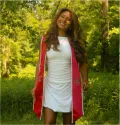
Sophie had the distinct honor of presenting a talk in the Pediatric Brain Disorders session at the International Neuropsychological Society Annual Meeting in Philadelphia in February 2026. The title of her talk was Structural Limbic Volume as a Mediator of Behavior Problems in Pediatric Traumatic Brain Injury; she found that youth with moderate to severe traumatic brain injury had significantly smaller limbic volume, and that the indirect effect of moderate to severe injury on attention problems via limbic volume better accounted for variability in attention. She also defended an undergraduate thesis, Cross-conditional Compensatory Functional Activation in Default-Mode Network and Salience Network in Executive Functioning, on April 30, 2026. In her thesis, Sophie examined patterns of associations within and across the default mode and salience networks, across several pediatric medical disorders that affect brain function. Sophie will begin a full-time Clinical Research Coordinator position with Dr. Eric Nelson at Nationwide Children’s Hospital in July, applying what she has learned during her time as an ADNiR recipient to a new population of youth with serious mental illness, early-onset psychosis, and substance use disorders. Sophie then plans to apply for graduate school in clinical neuropsychology.
And Dr. Hoskinson is thrilled to spend another year right down the hall (Sophie!) and right across campus (Declan!) from two outstanding lab graduates - congratulations on all you have accomplished!
2023 Recipients
Ajuna Mwesigye

Ajuna was an ADNiR scholar on a joint project with Dr. David Osher and Dr. Zeynep Saygin.
He is currently working as a virtual health technician for the University of Colorado Hospital (UCHealth).
Lingwen Ren

Lingwen was an ADNiR scholar in Dr. Fournier's lab.
Lingwen graduated in the spring of 2025.
2022 Recipients
Florencia Ontiveros
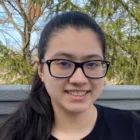
Florencia was an ADNiR scholar with Dr. Kristen Hoskinson.
Florencia received her Bachelor of Science in Neuroscience in 2024. She continues to work in Dr. Hoskinson's lab as a Clinical Research Coordinator and has joined Dr. Eric Nelson's lab in the Center for Biobehavorial Health at Nationwide Children's Hospital. She is interested in how pediatric injury and disease impact brain structure and function and how they related to cognitive and behavioral outcomes, especially cognitive abilities like memory. Florencia is currently involved in all aspects of neuroimaging research from recruiting to data analysis and want to pursue a PhD in cognitive neuroscience.
Mengxin (AvA) Ran
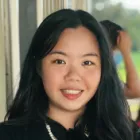
AvA was an ADNiR scholar in Dr. Julie Golomb's lab.
AvA is currently a masters student at the University of Chicago, working with Professor Monica Rosenberg and YC Leong. She is studying the neural mechanism of insight during memory and learning.
2021 Recipients
Alexa Shin

Alexa was an ADNiR scholar in Dr. Scott Hayes' lab.
Alexa is currently attending medical school at the University of Toledo. She was awarded a 2024 American Academy of Neurology Medical Student Research Scholarship for her project "Evaluation of Mental Rotation Test (MRT) modified for functional MRI assessment in early onset Parkinson’s disease patients," under the mentorship of Dr. Thyagarajan Subramanian.
Jessica Timog

Jess was an ADNiR scholar in Dr. David Osher's lab.
Jess earned her Master of Arts in Speech-Language Pathology from OSU in May 2026.
Jess is currently completing her clinical fellowship position as a speech therapist at an inpatient rehabilitation hospital and is working toward her dissertation project with Dr. Jennifer Lundine in the Childhood Cognition, Communication, and Brain Injury lab. She is interested in understanding pediatric traumatic brain injury and how best to support recovery toward independence.
2020 Recipients
Yasemin Gokcen
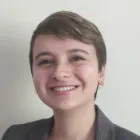
Yasemin was an ADNiR scholar in Dr. Zeynep Saygin's Lab.
Yasemin is currently a PhD student at the University of California, Merced, in the Cognitive and Information Sciences department working with Dr. David Noelle and Dr. Rachel Ryskin. Her dissertation project is focused on examining working memory mechanisms of context for language prediction.
Yasemin recently advanced to candidacy and completed an internship at Wisk Aero.
This summer, Yasemin is doing a summer internship at NASA Ames through the San Jose State University Research Foundation program.
Arian Sorani
Arian was an ADNiR scholar in Dr. Theodore Beauchaine’s lab.
Arian earned his master's degree in clinical research at The Ohio State University in 2024. He studied pharmacovigilance and international and domestic regulatory guidelines for conducting clinical trials.
Arian is currently a regulatory compliance officer at the James Comprehensive Cancer Center where he works with the Food and Drug Administration and Institutional Review Board to provide cancer patients with access to oncology trials.