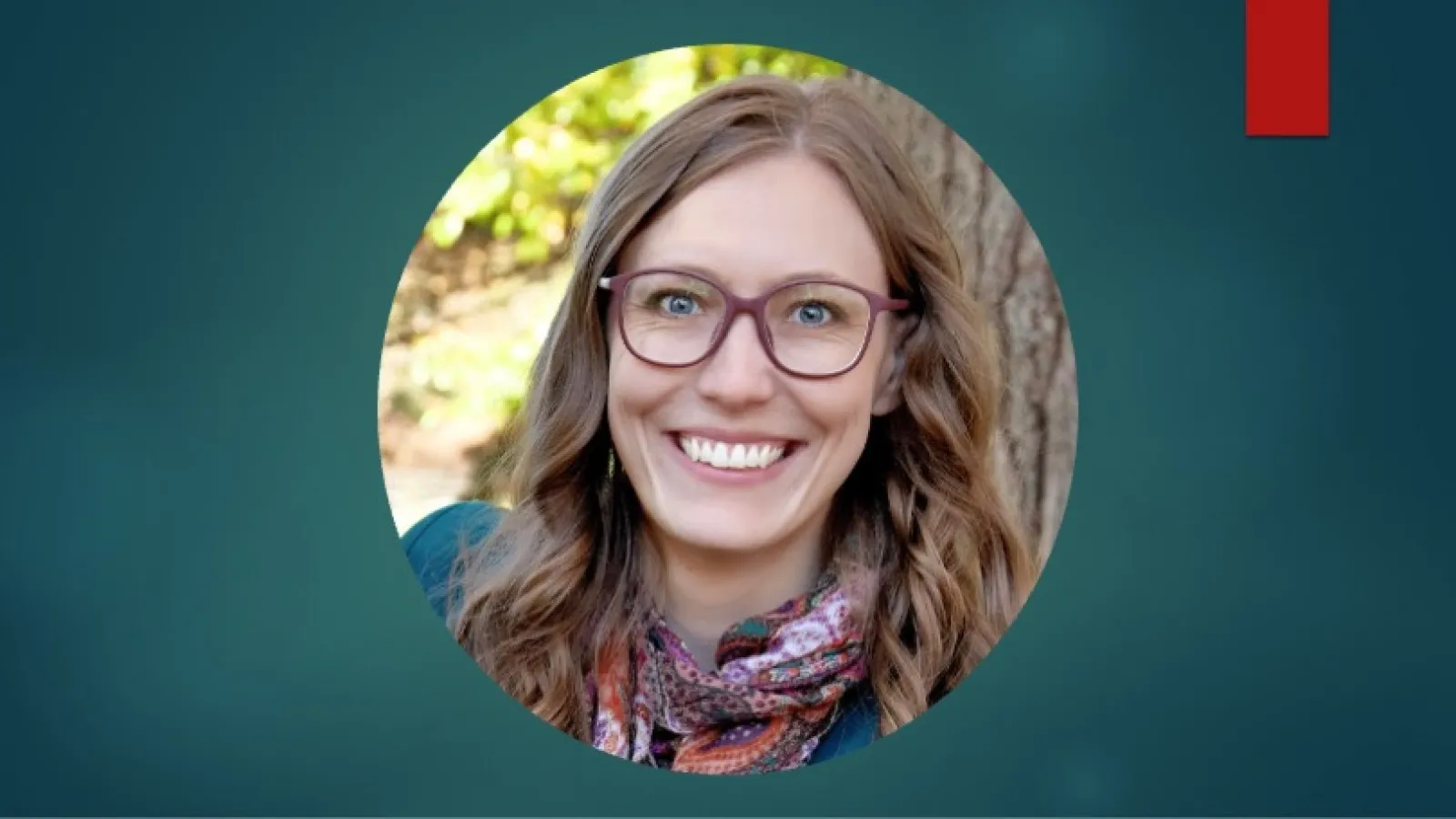
Alumni Spotlight: Dr. Heather Hansen

CCBBI recently caught up with alumna Heather Hansen. Dr. Hansen was a graduate student in the Cognitive Psychology program (2017-2023) and now leads her own lab at the College of William & Mary.
Can you tell us a little about your graduate work at OSU and CCBBI, including who your mentors were and when you graduated?
I was a cognitive psychology graduate student co-mentored by Drs. Zeynep Saygin and Andrew Leber, and I received my PhD in 2023. Using data collected at the CCBBI, I studied neural correlates of an auditory perception condition called misophonia. By combining assessment surveys with resting-state scans, we showed differential functional connectivity patterns in individuals with more severe misophonia from key regions of interest, like the anterior insula.
Please tell us about the pathway that led to your current position at William & Mary.
After graduating from OSU, I spent some time as a postdoc up in Montreal, most notably at the Montreal Neurological Institute at McGill. I worked with Dr. Christine Tardif on a large-scale neuroimaging autism project scanning at 7T. I simultaneously learned how to process multimodal neuroimaging data from open-access datasets, specifically the Welsh Advanced Neuroimaging Database, which I continue to use in my work at William & Mary. I applied for faculty positions in the 2024-2025 cycle, and began my appointment as an Assistant Professor in Psychological Sciences at William & Mary in Fall of 2025.
What surprised you most when you were setting up your own research lab?
I think what surprised me the most is how long setup takes. Since all technology and supplies ordering needs to happen through particular channels, getting everything set up and functioning (including installing software, putting up sound baffling panels on my lab walls, etc.) took a bit of time. I’m also surprised by how variable social engagement is between labs – I was fortunate to be trained in two labs at OSU that did activities together outside of campus and felt more like family, so I’m trying to bring that same energy to my lab here.
What are your current research interests?
A handful of things: I direct what I call the CAPES Lab (Cognition and Auditory Perception of Everyday Sounds), and I’m asking questions about the perceptual aspects of misophonia – what makes a sound bothersome, and how might pairing a visual stimulus with the sound or focusing your attention differently influence how bothersome you perceive the sound to be? I’m also really driven by the passions of my students, so I’m studying things that are a bit more tangential. For instance, I’m mentoring two honors theses this year, one by a student interested in multilingualism and misophonia and another interested in music preferences and misophonia. And each new project begets so many more research ideas!
What excites you most about your position at William & Mary?
So many things. I am excited by the genuine drive and work ethic of the undergraduates here – my lab is currently 10-15 students, many of whom have ideas and skills on par with first year graduate students. I am also excited by the close-knit department at William & Mary and the potential for collaboration with other professors in the department (I have a grant in the works studying odor perception in misophonia with another professor here!). But more generally, I’m excited to be in the driver’s seat as a lab PI – it’s so fun getting to customize things and make decisions (my entire lab space is covered in teal), geek out with students about misophonia, and see students grow in their excitement for research!
What advice would you give to students and postdocs who are considering a career in academia?
The academic job market is hard. But if you’re dedicated to academia as your career (like I was), it’s not impossible and is ultimately so rewarding! I think the most helpful advice that was given to me when I was applying is to not internalize rejection – sometimes there will be a job posting that seems to fit you perfectly, but that department had an internal candidate in mind and your chances were slim to start. For instance, I applied to a job that literally listed “misophonia research” as a desired domain for applicants, and I didn’t even get an interview. So shoot your shot, have confidence in your qualifications, and keep going until something sticks.